

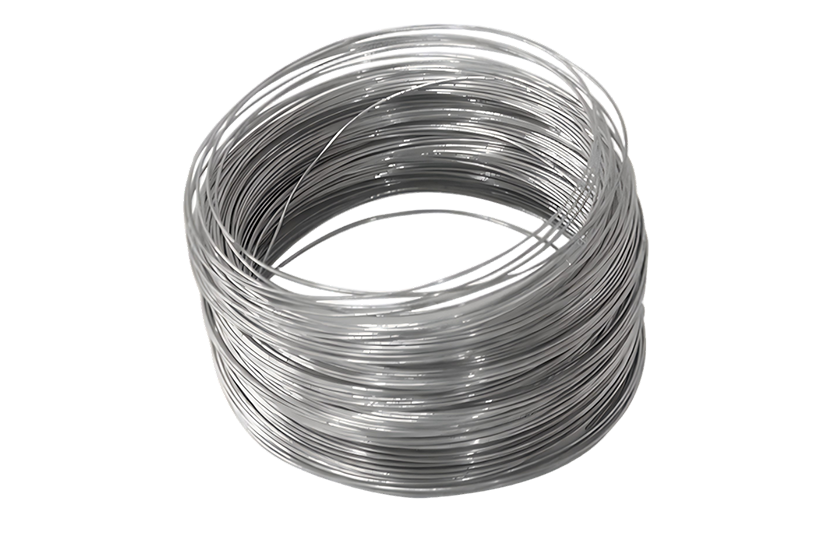
Industrial wire products are essential components in modern manufacturing, construction, energy, transportation, agriculture,
and mechanical engineering. From binding and fastening to lifting, reinforcing, screening, fencing, and transmission systems,
steel wire materials are used in countless applications where strength, durability, flexibility, and corrosion resistance matter.
Choosing the right steel wire material is not only a technical decision, but also a cost-performance decision that affects product
quality, safety, service life, and long-term maintenance.
This guide provides a comprehensive overview of industrial wire products, focusing on how to select the right steel wire material
based on application requirements, mechanical properties, surface finish, wire diameter, strength level, corrosion resistance, and
forming performance. It is written for manufacturers, buyers, engineers, procurement teams, and B2B content use, with clear
definitions, practical selection criteria, comparison tables, and SEO-friendly structure.
Industrial wire products are metal wire-based materials and finished wire components made for industrial use. These products are
typically produced from carbon steel, stainless steel, galvanized steel, alloy steel, spring steel, or other engineered wire grades.
They may be supplied as straight wire, coiled wire, cut wire, shaped wire, mesh wire, welded wire, spring wire, rope wire, binding
wire, fencing wire, and many other wire forms.
In the industrial supply chain, steel wire is valued for its high tensile strength, excellent formability, adaptable surface treatments,
and wide range of diameters and specifications. Depending on the end use, industrial wire products may require precise tolerance,
controlled hardness, superior fatigue resistance, or advanced corrosion protection.
Selecting the right steel wire material directly influences product performance and manufacturing efficiency. A wire that is too soft
may deform during use, while a wire that is too hard may crack during bending or forming. A wire with insufficient corrosion resistance
can fail prematurely in outdoor or humid environments. A wire with the wrong tensile strength can create safety risks in load-bearing
applications.
The best steel wire material balances mechanical strength, ductility, surface quality, dimensional precision, and environmental
resistance. The correct choice improves:
Steel wire materials are commonly categorized by composition, processing method, and surface treatment. Each type offers a different
combination of strength, flexibility, corrosion resistance, and cost.
| Steel Wire Material Type | Main Characteristics | Typical Advantages | Common Applications |
|---|---|---|---|
| Low Carbon Steel Wire | Good ductility, moderate strength, easy to form | Affordable, easy to bend, suitable for general use | Binding wire, mesh, packaging, general industrial tying |
| High Carbon Steel Wire | High strength, high hardness, strong elasticity | Excellent load resistance and spring performance | Springs, cable reinforcement, high-strength wire products |
| Stainless Steel Wire | Excellent corrosion resistance, good surface finish | Long service life, clean appearance, low maintenance | Medical, marine, food processing, chemical environments |
| Galvanized Steel Wire | Steel wire with zinc coating for protection | Improved weather resistance, cost-effective corrosion defense | Fencing, construction, agriculture, outdoor systems |
| Alloy Steel Wire | Enhanced mechanical performance through alloying elements | High strength, fatigue resistance, engineered properties | Precision components, automotive parts, industrial springs |
| Spring Steel Wire | Designed for elastic recovery and repeated stress cycles | Excellent springback, fatigue strength, durability | Compression springs, torsion springs, mechanical assemblies |
Choosing steel wire material should begin with the application requirements. Different industrial wire products are exposed to
different stresses, temperatures, chemicals, and environmental conditions. A structured selection process helps avoid over-specification
and under-specification.
Start by identifying what the wire must do. Is it used for load bearing, fastening, spring action, reinforcement, filtration,
shielding, or corrosion resistance? A wire for a spring is not the same as a wire for fencing or mesh. Industrial wire products are
often optimized for one primary function, so the use case should guide material choice.
Mechanical properties are central to steel wire selection. Important factors include tensile strength, yield strength, elongation,
hardness, and fatigue resistance. High tensile strength is important when the wire must withstand pulling forces. High elongation is
useful when the wire must bend or shape without breaking. Fatigue resistance is critical for applications involving repeated loading.
Environmental exposure can dramatically affect wire performance. Outdoor conditions, salt spray, humidity, chemicals, and temperature
changes may require stainless steel, galvanized coating, or another protective finish. Indoor dry environments may allow the use of
standard carbon steel wire at a lower cost.
Some industrial wire products must be bent, twisted, welded, cut, stamped, or woven. Materials with high hardness can be more difficult
to process, while softer materials are easier to shape but may offer lower strength. Manufacturing methods must align with wire grade
and temper.
Corrosion resistance is often one of the most important selection criteria for industrial wire products. Stainless steel wire provides
the strongest corrosion performance, while galvanized wire offers a practical balance of protection and cost. Bare carbon steel may be
acceptable only in controlled environments or when secondary coating is applied.
Wire diameter, tolerance, and roundness affect both performance and manufacturability. Fine wire may be required for delicate or
high-precision applications, while thicker wire is used for reinforcement or structural purposes. Dimensional consistency also helps
ensure stable automated production.
| Property | What It Means | Why It Matters |
|---|---|---|
| Tensile Strength | The maximum pulling force the wire can resist before breaking | Essential for load-bearing and tension applications |
| Yield Strength | The point where the wire begins to deform permanently | Important for maintaining shape under stress |
| Elongation | How much the wire can stretch before failure | Indicates ductility and forming ability |
| Hardness | Resistance to indentation or surface deformation | Influences wear resistance and processability |
| Fatigue Resistance | Ability to survive repeated stress cycles | Critical in springs and dynamic systems |
| Corrosion Resistance | Ability to resist rust and chemical attack | Extends life in humid, outdoor, or chemical environments |
| Ductility | Ability to bend or deform without cracking | Supports forming, twisting, and shaping operations |
| Material | Strength | Flexibility | Corrosion Resistance | Cost Level | Best For |
|---|---|---|---|---|---|
| Low Carbon Steel | Medium | High | Low to Medium | Low | General-purpose industrial wire products |
| High Carbon Steel | High | Medium | Low to Medium | Medium | Springs, tension parts, reinforcement wire |
| Stainless Steel | Medium to High | Medium | Very High | High | Outdoor, marine, food, and chemical use |
| Galvanized Steel | Medium | Medium | High | Medium | Fencing, agriculture, and outdoor structures |
| Alloy Steel | Very High | Medium | Medium | High | High-performance industrial and mechanical parts |
Surface treatment is another major factor in steel wire material selection. Even when the base metal is suitable, the wrong finish can
reduce durability or complicate downstream processing. Common finishes include:
The finish should match both the installation environment and the manufacturing process. For example, wire intended for welding may
require a finish that does not interfere with bonding, while wire used outdoors may benefit from galvanization or stainless steel.
Steel wire materials support a wide range of industrial wire products across many sectors. Understanding the final application helps
narrow down the ideal material grade.
| Application Area | Common Wire Material | Typical Requirement |
|---|---|---|
| Construction | Galvanized steel, carbon steel, alloy steel | Strength, consistency, weather resistance |
| Agriculture | Galvanized steel, low carbon steel | Rust resistance, easy handling, affordability |
| Fencing | Galvanized steel, stainless steel | Outdoor durability, tensile strength |
| Springs and Mechanical Parts | High carbon steel, spring steel, alloy steel | Elastic recovery, fatigue resistance |
| Food and Medical Equipment | Stainless steel | Hygiene, corrosion resistance, cleanability |
| Filtration and Screening | Stainless steel, galvanized steel | Precision, durability, environmental resistance |
| Packaging and Binding | Low carbon steel, annealed wire | Flexibility, easy tie-down performance |
Wire diameter affects strength, flexibility, and manufacturing behavior. Smaller diameters are generally more flexible and suitable
for detailed or lightweight applications. Larger diameters provide greater load capacity and structural stability.
In industrial wire products, diameter selection should consider:
Tighter tolerances are important when wire is used in automated equipment or precision assemblies. For general-purpose applications,
a broader tolerance range may be acceptable and more cost-effective.
Steel wire remains one of the most versatile materials for industrial manufacturing because it offers a strong combination of
performance and value.
Incorrect wire selection can lead to product failure, higher production costs, or frequent maintenance. Common mistakes include:
A good selection strategy focuses on actual performance needs rather than only on price or general material descriptions.
| Selection Factor | Questions to Ask |
|---|---|
| Application | What function will the wire perform? |
| Strength | How much tensile load or stress must it handle? |
| Flexibility | Will the wire need to bend, twist, or stretch? |
| Environment | Will the wire be exposed to moisture, salt, chemicals, or heat? |
| Corrosion Resistance | How long must the wire last without rust or surface damage? |
| Processing Method | Will it be welded, cut, formed, or woven? |
| Diameter and Tolerance | What size and precision are required? |
| Finish | Does it need galvanizing, polishing, annealing, or coating? |
| Budget | What is the target balance between performance and cost? |
For SEO-friendly publishing, these keyword themes are strongly related to industrial wire products and steel wire material selection:
Selecting the right steel wire material for industrial wire products requires a careful balance of strength, ductility,
corrosion resistance, processability, diameter, and cost. Different applications demand different wire grades and surface
treatments, and the most effective choice is always the one that matches the real operating conditions.
Whether the goal is to produce springs, fencing, mesh, binding wire, reinforcement wire, or precision industrial components,
a structured material selection process helps improve product reliability, reduce waste, and extend service life. By understanding
the main wire material types, mechanical properties, finishes, and application requirements, buyers and engineers can make more
informed decisions in the industrial wire market.
In today’s competitive manufacturing environment, high-quality industrial wire products depend on the correct steel wire material
selection from the very beginning. Choosing wisely supports performance, safety, and long-term value across a wide range of
industrial applications.

 هاتف أرضي+86-513-85100011
رقم الهاتف: +86 13585223056
 بريد إلكتروني:hangtong@nthangtong.com
vicky@nthangtong.com
 العنوان: رقم 508، طريق جوانجكسينج، مدينة بايشان، مقاطعة بواي، مدينة جياوزو، مقاطعة خنان
حقوق الطبع والنشر © شركة خنان سوكسيانج للكابلات الفولاذية المحدودة
يستخدم هذا الموقع ملفات تعريف الارتباط لضمان حصولك على أفضل تجربة على موقعنا.
 English
 Español
 한국어
한국어 Tiếng Việt
 Filipino



 هاتف
هاتف
تعليق
(0)